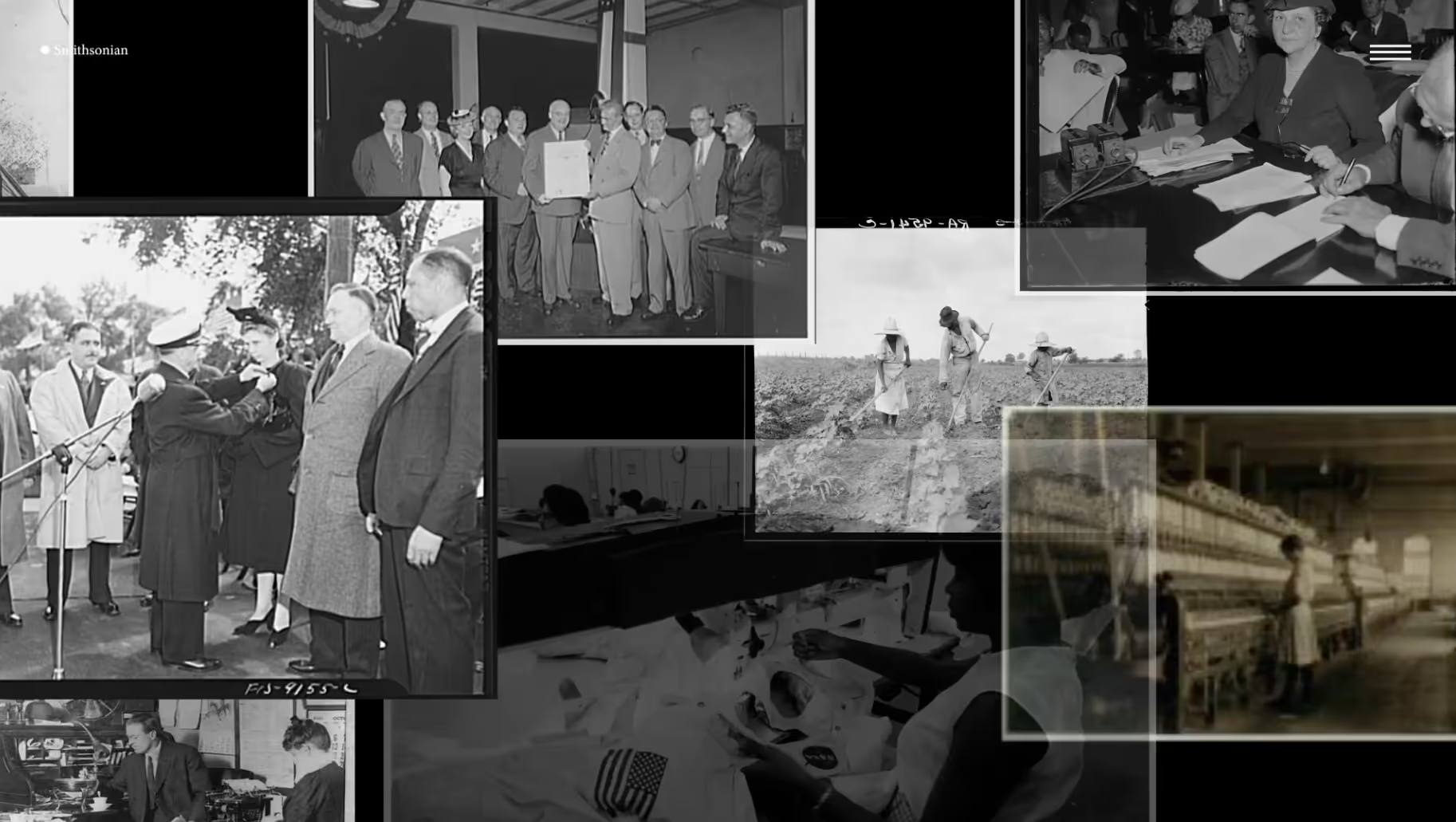
The Smithsonian American Women’s History Museum had not yet opened a physical museum, but wanted to launch a digital experience for International Women’s History Month that could introduce the future museum, raise awareness, and begin a larger cultural conversation around overlooked stories from women’s history.
Over a three-month period, we guided product strategy, facilitated workshops, explored interaction patterns, developed the narrative framework, and collaborated closely with developers and stakeholders to launch the museum’s first digital experience in time for Women’s History Month.
I led the project strategy from initial concept through launch, facilitating workshops, helping define product goals, prioritizing features, shaping the interaction approach, contributing to branding and narrative direction, designing motion and microinteractions, collaborating with developers during implementation, and participating heavily in accessibility and QA efforts.

X
QA became especially challenging near launch. Some interaction bugs appeared inconsistently across browsers and devices, requiring strategic prioritization and tradeoff discussions. In one case, a mobile Firefox gallery issue could not be reliably reproduced or resolved before launch. Because analytics later showed that mobile Firefox represented a very small percentage of traffic, the team made the strategic decision to prioritize fixes affecting Chrome, Safari, and higher-traffic experiences.
This project reinforced how important prioritization and systems thinking become when immersive storytelling intersects with real-world technical constraints.
At the time, we had not yet determined whether the framework would rely primarily on percentage based scaling, a combination of percentages and relative units, or another responsive approach. This early exploration helped define how typography, spacing, and components could adapt fluidly across screen sizes before development began.
Component behaviors and responsive patterns were also informed by the underlying content model, ensuring the system could flexibly support a wide range of editorial and exhibition needs.
WIP.
